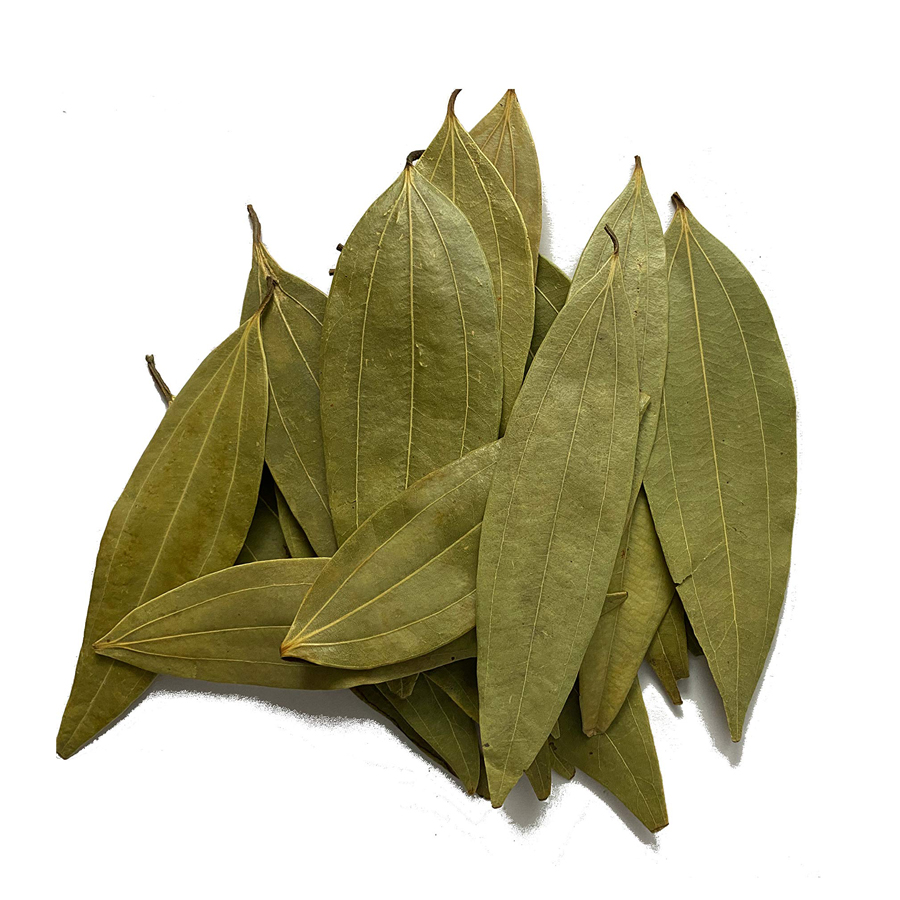
Bay Leaf
In Stock
Bay leaf, also known as laurel leaf, is a fragrant spice derived from the Laurus nobilis tree, commonly used in cooking to flavor soups, stews, and other dishes, and is typically removed before serving.
Description
Origin and Types:
- Laurus nobilis: Bay leaves come from the bay laurel tree, an evergreen native to the Mediterranean region.
- Indian Bay Leaf: Distinguished from bay laurel, Indian bay leaf (also known as Cinnamomum tamala) has a different taste and aroma, often described as similar to cinnamon.
- Other Varieties: There are other species of bay leaves used in cooking, including California bay leaf, Indonesian bay leaf, and Mexican bay leaf.
Culinary Uses:
- Flavor Enhancer: Flavor Bay leaves are added to dishes to enhance their and aroma, particularly in soups, stews, braises, and marinades.
- Added Early, Removed Before Serving: Bay leaves are typically added to dishes early in the cooking process and removed before serving due to their tough texture and potential to overpower the flavor of the dish.
- Powdered Form: Bay leaves can also be used in powdered form, often added to soups and stocks.
Health Benefits and Precautions:
- Potential Benefits: Some studies suggest that bay leaves may have antioxidant, anti-inflammatory, and antimicrobial properties.
- Safety: While generally safe when used in cooking, consuming whole bay leaves is not recommended.
- Interactions: Bay leaf may interact with sedative medications, so caution is advised if taking such medications.
- Overconsumption: Overconsumption of bay leaf may lead to drowsiness and slowed breathing.